
A business can post solid revenue, show a profit on the income statement, and still leave the owner staring at the bank account thinking, where did the money go? That gap is usually not a sales problem. It’s a cash flow problem.
This is where a lot of small business owners get stuck without proper bookkeeping. On paper, the business looks healthy. In real life, the cash feels tight. Bookkeeping, the essential process of tracking business money, makes that difference clear, so the numbers start making more sense, and financial decisions get a lot less stressful.
In this post, you’ll see why profit and cash tell two different stories, the three biggest reasons revenue never becomes usable cash, and the five numbers from your financial statements that help you stay ahead of problems before they turn into a scramble.
Why strong revenue can still leave a business cash poor
Many owners assume the math should be simple. If the business made $10,000 this month, there should be $10,000 more sitting in the bank. But business finances rarely work that cleanly.
Revenue tells you what the business earned. It does not tell you what money actually arrived, what bills are due next week, or what cash already went out for things that do not show up clearly on a standard profit and loss report based on recording transactions.
That accounting disconnect is more common than most people think. Sales can be coming in. Work can be getting done. Invoices can be sent on time. Yet the checking account still feels like it’s running on fumes.
A widely cited small business statistic says about 82% of small businesses that fail report cash flow problems as a major factor. That matters because it means plenty of businesses do not fail from lack of demand alone. They fail because the timing of cash coming in and cash going out gets out of balance.
Profit tells you if the business is working, but cash tells you if it can survive.
That is the core issue. A profitable business can still struggle when the owner only watches revenue and ignores how financial transactions impact the bank account month to month. Once you see both sides, the confusion starts to fade.
Profit on paper and cash in the bank are two different stories
Every business tells two financial stories at the same time.
The first story comes from the income statement, also called the profit and loss statement. That report answers one basic question: did the business make money? It tracks revenue, expenses, and the profit left over after those expenses. The balance sheet contrasts this by providing a snapshot of the business’s overall financial position.
The second story comes from the bank account. That one answers a more urgent question: is there cash available right now?
 These two stories often move together, but not always. A business might look profitable on the P&L while the bank balance keeps dropping. The cash flow statement bridges that gap by showing how profit converts to actual cash in the bank. That is exactly where cash flow stress starts.
Here is the simplest way to compare them:
| Financial view | What it tells you |
|---|---|
| Income statement | Whether the business earned a profit |
| Bank account | Whether the business has cash available now |
That gap explains why strong revenue does not always feel like financial stability. For example, you might finish work this month and record the sale on an accrual basis, but the customer may not pay for 30 or 60 days. Meanwhile, payroll, rent, fuel, software, and insurance still hit the account on schedule.
So when owners say, “We’re busy, but the bank still feels tight,” the answer is often sitting right there. The business may be profitable, but the cash timing is off.
The three biggest reasons revenue never turns into cash
Most small business cash flow problems come back to three patterns. None of them are unusual, and all of them can happen even when sales look healthy.
You have not collected the money yet
This is the most common reason, especially in service businesses that invoice after work is done.
Say you complete a job for $10,000 and send the invoice today. From an accounting view, that revenue may already show up on your income statement. On paper, you made the money. In the bank, though, nothing has changed yet.
The client might pay in 30 days. They might pay in 60. In the meantime, your expenses keep moving.
Payroll still runs. Fuel still gets bought. Materials still have to be paid for. Rent, software, subscriptions, and insurance do not wait for the customer check to clear.
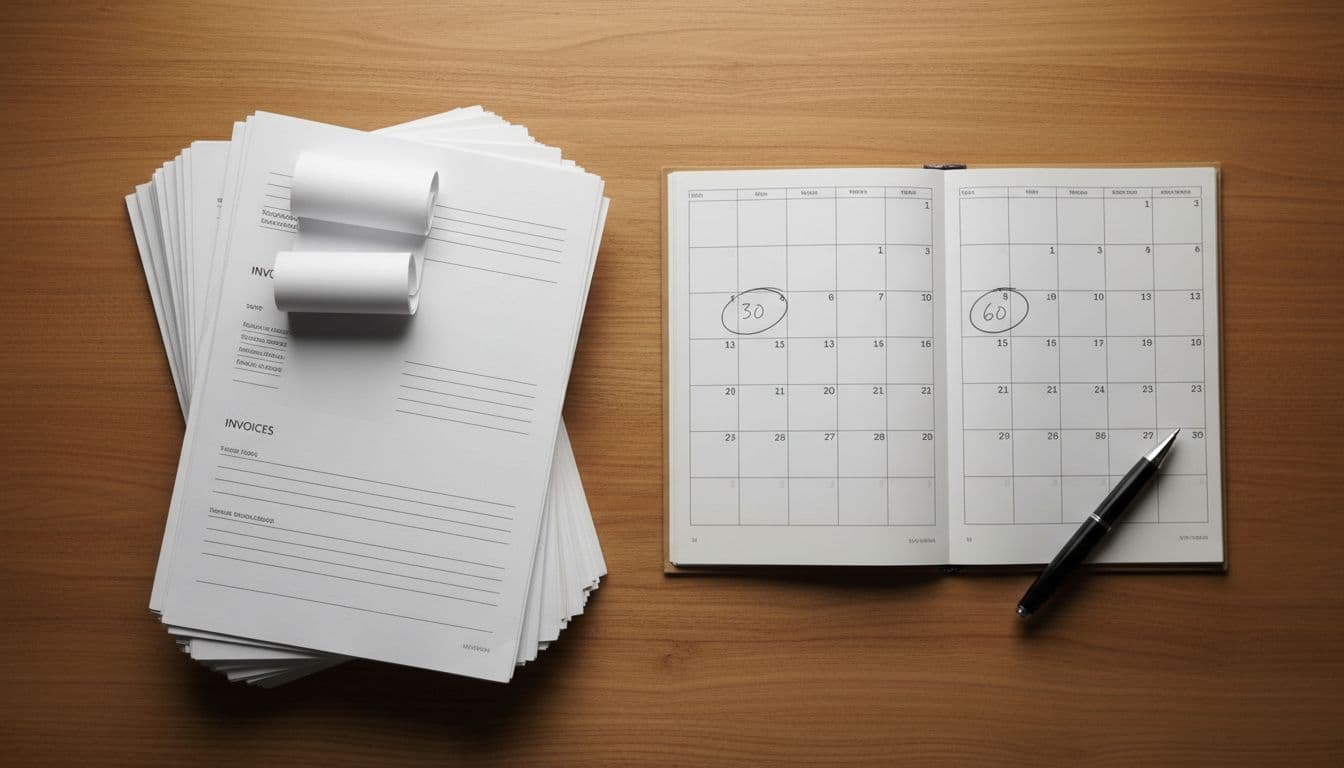 That is why accounts receivable matters so much. Accounts receivable simply means money customers still owe you. It may count as revenue, but until it lands in the bank, it is not cash you can use. Accurate bookkeeping helps track these accounts receivable balances closely to avoid surprises.
Recent business research has found that more than half of small businesses are waiting on unpaid invoices, with the average amount owed sitting around $17,000. For a small company, that is not a small delay. That can be the difference between feeling stable and feeling squeezed.
The age of those invoices matters even more than the total. A few invoices under 30 days may be normal. Once they start drifting past 30 or 60 days, pressure builds fast. The work is done, but the business is still carrying the load.
Cash is already spoken for by overhead
Even when money does hit the bank, it often has a long list of jobs waiting for it.
Most owners keep a close eye on direct job costs, like labor, materials, or project expenses. Those costs are easy to see because they are tied to the work itself. What gets missed more often is the quiet, steady pull of overhead.
Overhead includes the bills that keep showing up whether sales were great or slow. Think payroll taxes, payroll as a major monthly outflow, software subscriptions, insurance, office rent, marketing costs, merchant processing fees, accounting help, legal work, and state or federal taxes tied to running the business.
One or two of those expenses may not look serious on their own. Together, they can eat through cash quickly. Solid bookkeeping practices reveal these patterns early.
This is why two businesses can post the same revenue and still have very different financial health. One owner knows every recurring expense and watches it closely. The other mostly looks at top-line sales and assumes the rest will take care of itself.
That is a dangerous assumption, because revenue growth alone does not fix cash problems. If overhead grows just as fast, or faster, the business may stay stressed no matter how busy it gets.
A simple habit makes a big difference here. Know every subscription. Know every recurring service. Know every monthly overhead cost attached to the business. Small leaks add up, and cash usually disappears through a bunch of ordinary charges, not one dramatic mistake.
Some money leaves the business without showing up clearly on the P&L
This is the reason that surprises a lot of owners.
They pull up the profit and loss report, see that things look okay, then check the bank account and feel confused. The missing piece is that not every cash movement appears as a normal expense on the income statement.
Here are a few common examples:
- Loan payments: If the business pays $1,000 on a loan, the bank account loses the full $1,000. On the P&L, only the interest portion may show as an expense. The rest reduces the loan balance on the liabilities side of the balance sheet.
- Owner draws or distributions: Money moved from the business to the owner leaves the bank right away, but it usually does not show as a standard operating expense.
- Equipment purchases: Buy a $10,000 machine today, and the cash leaves today. Yet accounting rules may spread that cost over several years through depreciation, treating it as a long-term asset rather than an immediate expense.
- Inventory purchases: Product-based businesses often pay for inventory long before that inventory turns into sales. Recording transactions like these accurately shows how they build assets without hitting the P&L right away.
This is why money can seem to vanish even when the reports look fine at first glance.
Nothing mysterious is happening. The cash is moving in ways the P&L does not make obvious. Once that clicks, the numbers start to line up. The bank account is not lying, and the income statement is not wrong. They are just measuring different things.
Most cash flow problems are really timing problems
When those three issues stack together, the pattern becomes clear. Cash flow problems are usually about timing, not just totals.
The business might finish work today and send the invoice today. Payment may not arrive for a month or two. At the same time, expenses continue on a fixed schedule. Payroll taxes, rent, vendor bills, credit card payments, fuel, software, and insurance represent ongoing financial transactions that keep pulling money from the account.
That creates a squeeze from accounts payable obligations, even when the business is technically profitable.
The hard part is that many small businesses do not have much room for error. Research from the JP Morgan Chase Institute found that roughly half of small businesses operate with fewer than 15 days of cash buffer. In plain terms, many owners only have about two weeks of breathing room in the bank.
So when a few customers pay late, or a large bill shows up early, things can tighten up fast. That is why cash flow issues often feel sudden. In reality, they usually build quietly for weeks before the pressure becomes obvious.
The five numbers to review every month
The fix is not complicated accounting. It is consistent awareness. A short monthly review of a few key numbers from your general ledger and trial balance can show problems early, while there is still time to adjust.
 1. Actual cash in the bank
Start with the most real number in the business from basic bookkeeping. How much cash is available today? Not expected revenue, not future payments, and not paper profit. This number shows how much flexibility the business has right now and how much cushion is available for surprises. 2. Accounts receivable aging
Next, look at what customers still owe. The total matters, but the age matters more. Review invoices under 30 days, over 30 days, and over 60 days. Older receivables are one of the earliest warning signs that future cash flow will tighten. 3. Upcoming bills and payables
Then flip to the outgoing side. What payments are coming up soon, including accounts payable? Look at payroll taxes, rent, vendor bills, loan payments, credit cards, and recurring software charges organized by your chart of accounts. Seeing these ahead of time helps prevent that awful feeling of being blindsided by money you technically knew was coming. 4. Gross profit
Gross profit is what remains after the direct cost of delivering your product or service, as tracked through debits and credits. That number matters because gross profit pays for overhead.
Here is a simple example:
| Revenue | Direct costs | Gross profit | Overhead | Result |
|---|---|---|---|---|
| $100,000 | $70,000 | $30,000 | $35,000 | Cash slowly drains |
In that example, revenue looks strong. But the business still loses ground because gross profit is not high enough to cover overhead. This is why reviewing revenue alone can give a false sense of security, especially when considering stockholders equity for long-term health. 5. A short cash forecast
Finally, look slightly ahead after making adjusting entries for accurate bookkeeping. What cash is likely to come in over the next few weeks, and what cash is expected to go out? A short forecast does not need to be fancy. Even a simple estimate can show trouble early enough to act.
A basic forecast often spots cash pressure before the bank account does.
When these five numbers become part of a monthly routine, surprises become less common. Instead of reacting when cash gets tight, the business starts seeing the pressure build in advance.
The habit that makes all of this easier
One of the simplest ways to stay in control is to stay close to the numbers all year, not just at tax time, with accounting software as the primary tool for tracking the data.
That means knowing every subscription, every recurring overhead charge, and every expense that quietly pulls from the account each month. It also means performing bank reconciliation and reviewing the bookkeeping regularly, often weekly, so patterns show up early. These habits build internal controls that safeguard your finances.
Once you do that, decisions get clearer. In a tight month, you may spot software you can cancel or spending you can pause. In a stronger month, you may feel comfortable hiring a contractor, increasing marketing, or adding a tool that saves time.
The big shift is this: the numbers start guiding decisions instead of emotions. The business feels less unpredictable because you are no longer guessing. You can see what is happening, where pressure is coming from, and what needs attention next. Upgrading from a single entry system to double entry bookkeeping gives you the detail required for sustainable growth.
For owners who want clearer monthly reporting, bookkeeping cleanup, and plain-English accounting, hiring a bookkeeper makes managing these numbers easier. Smoky Mountain CPAs focuses on helping small businesses turn messy books into useful numbers and can connect you with a trusted bookkeeper.
The bottom line
A business can produce good revenue and still struggle if cash is moving out faster, or sooner, than it comes in. Revenue shows activity, profit shows whether the model works and builds retained earnings for growth, and cash shows whether the business can keep going. When you maintain accurate bookkeeping with journals and daybooks as historical records of business activity, and review your cash position, receivables, payables, gross profit, and short-term forecast on a regular basis, financial problems stop feeling random. You start seeing them early, making better calls, and running the business with a lot more control through solid bookkeeping and accounting practices, including monitoring financial statements.