Cash vs Accrual Accounting: Which Method Fits Your Small Business?
The way you handle small business accounting can change your business’s financial health on paper. For many business owners, cash vs accrual accounting sounds like a back-office choice until taxes, late payments, or a loan application make it urgent.
One method follows cash as it moves. The other records income and costs when they happen. That difference affects your reports, your tax timing, and the decisions you make from month to month.
How the cash accounting method and accrual accounting method work
The cash accounting method is the simpler option for recording financial transactions. You record revenue when money lands in your bank account, and you record expenses when you pay them.
The accrual accounting method works differently. You record revenue when you earn it, even if the customer pays later. You record expenses when you take on the cost, even if you pay the bill next week.
Here’s a simple example. Say a web designer finishes a project in March and sends the invoice that same day. The client pays in April. Under the cash accounting method, that revenue shows up in April because that’s when cash changes hands. Under the accrual accounting method, it shows up in March, because that’s when the revenue was earned.
The same idea applies to bills. If your bookkeeper sends you a March invoice and you pay it in April, the cash accounting method records the expense in April. The accrual accounting method records it in March.
You may also hear two useful terms. Accounts receivable means unpaid customer invoices. Accounts payable means bills you still owe.
The table below shows the core difference at a glance.
| Topic | Cash accounting method | Accrual accounting method |
|---|---|---|
| Revenue | Recorded when cash changes hands | Recorded when earned |
| Expenses | Recorded when paid | Recorded when the cost happens |
| Unpaid invoices | Usually not shown yet | Shown as accounts receivable |
| Unpaid bills | Usually not shown yet | Shown as accounts payable |
| Best fit | Simpler businesses focused on cash | Businesses that need a more comprehensive picture |
The short version is this: the cash accounting method shows money movement, while the accrual accounting method shows business activity.

Rules matter, too. Some businesses can choose their method, while others may face limits based on inventory, business type, IRS revenue threshold, or local tax rules. The IRS explains the basic framework in IRS Publication 538. Because those rules can change by situation, it’s smart to confirm your options with a CPA or tax professional before you commit.
How cash vs accrual accounting affects taxes, cash flow, and reporting
The biggest surprise for many owners is that profitability and cash flow are not the same thing. A highly profitable month on paper can still feel tight if customers haven’t paid yet, highlighting the gap between paper profit and actual bank balances.
Under cash basis, taxable income for tax purposes often lines up more closely with cash received due to fewer timing differences. That can help with short-term cash flow, especially if clients pay slowly. On the other hand, accrual basis uses revenue recognition to record income before the money arrives, which may create pressure if you don’t plan ahead.
A strong profit report doesn’t help much if the bank account is thin.
A strong profit report doesn’t help much if the bank account is thin.
Still, accrual gives you an accurate picture of your finances and true financial position. It follows the matching principle to align costs with the revenue they generate. If you send many invoices, carry unpaid bills, or review monthly trends, accrual makes your numbers more useful. It shows what you earned, what you owe, and what customers still owe you, all reflected clearly in financial statements like the balance sheet and income statement.
That clarity matters when you make decisions. If you only use cash basis, one delayed customer payment from timing differences can make a good month look weak. One late bill can make a weak month look stronger than it is. Accrual smooths out that timing noise for better reporting.
Lenders, investors, and buyers often prefer accrual-based reports and financial statements because they tell a more accurate story of profitability and financial position. Even if you file taxes on cash basis for tax purposes, you might still want accrual-style reports for management. For a plain-English overview of the cash vs accrual tax impact, that resource is a helpful starting point.
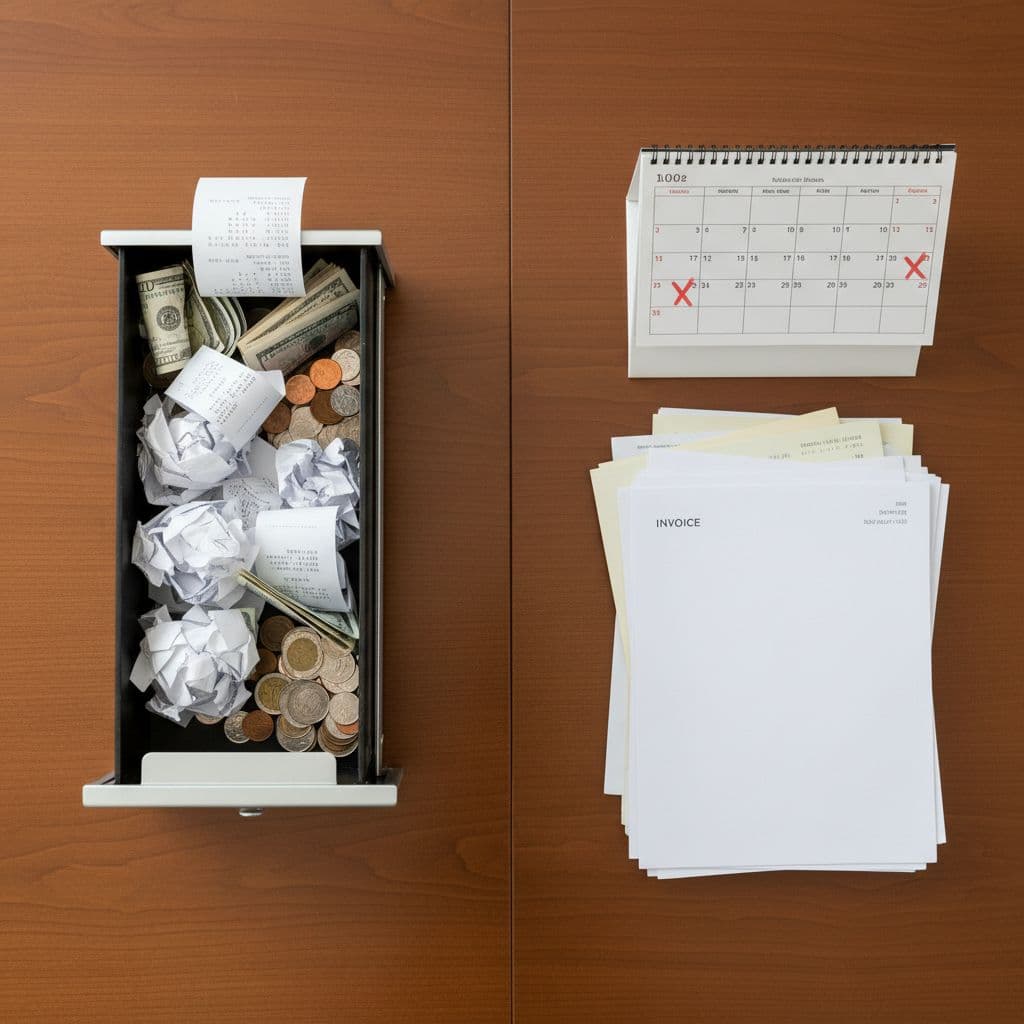
Because tax and reporting rules vary by business structure, inventory, revenue recognition, and jurisdiction, there’s no one-size-fits-all answer. A sole proprietor with a simple service business may have more flexibility than a growing company with inventory and outside financing.
Real-world examples for service, product, and growing businesses
A service business often starts with cash basis because it’s easy to follow. Picture a solo house cleaner who gets paid the same day as each job. Here, revenue earned aligns closely with cash received, so cash basis works well as bank activity matches the work.
A product-based business is different. Say you run a gift shop and buy inventory weeks before customers purchase it. Accrual accounting gives a better view of margins and what you owe vendors because it recognizes revenue earned at the time of sale and expenses incurred when inventory is purchased. Inventory can also bring extra tax rules, so this is one area where professional advice matters most.
Now think about unpaid invoices and bills. A small marketing agency finishes a project in June, sends an invoice, and gets paid in July. It also receives a software bill in June but pays it in July. Cash basis records both in July. Accrual records revenue earned and expenses incurred in June, ensuring they fall within the proper accounting period, including proper handling of prepaid expenses.

Even sectors like nonprofit accounting must choose between cash and accrual methods to meet compliance requirements.
As your business grows, the right answer can change. More invoices, more bills, more inventory, and more reporting needs can all push you toward accrual, especially for GAAP compliance or IFRS standards if scaling or seeking significant investment. If that sounds familiar, this guide on when small businesses switch methods gives useful context.
The best method is the one that fits both your operations and the rules that apply to you. Cash basis is simpler. Accrual is more complete. The right choice in cash vs accrual accounting depends on what your business sells, how you get paid, and how much visibility you need.
Before you choose or switch in your small business accounting setup, talk with a qualified accountant or tax professional. A short review now can save you from tax surprises, confusing reports, and costly decisions later.